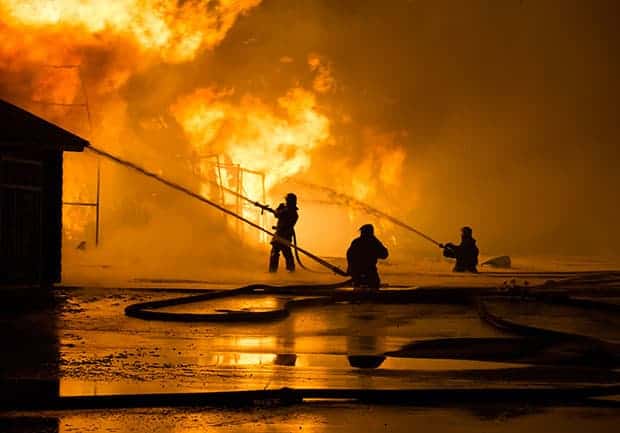
Last week, having that fire in our neighborhood made me stop and think about some things that I’ve been putting off doing that would be important in the event of an emergency or death.
This week I thought I would do some preparation and run an “In Event Of An Emergency” week, and talk about some things you should do in case of a death, natural disaster, or a fire like we came close to having last week. (Don’t forget to make sure you’re paying for fire services!)
For quite a while I’ve been meaning to do one of those “What If I Die” spreadsheets listing all of our important bank account information, life insurance policies, mortgage information, and so on, and put it in our fire safe.
I then also realized that there are a lot of other things that we should really be putting in a safer place, like marriage certificates, birth certificates etc.
To kick off “In Event Of An Emergency” week, I thought I’d put together a post listing some of the things that you should consider putting in your safe deposit box or fire safe.
Quick Navigation
Safe Deposit Box Or Fire Safe?
In doing some research online, there are varying opinions on whether or not people should just get a fire safe and keep their important documents at home, or if they should get and pay for a safe deposit box at their local bank branch.
Many of the opinions I read think that a good fire safe in the home should be sufficient and that for most people it should be enough to cover you in the event of a fire. You need to take into account your personal situation, and figure out just how important and valuable your documents and other items you’re storing are.
If you still want the added security and safety benefits of having a safe deposit box, renting one can cost anywhere from $20 to $150 a year depending upon the size of the box, and the bank where you’re renting it. Do some research to find your best deal and the bank with which you’ll feel most secure.
Just remember, even a bank safe deposit box isn’t 100% safe and secure and can still be susceptible to fire, flood, earthquake or theft.
To find a good home fire safe just make sure you’re finding one that is rated for whatever you’re storing:
- Document storage safes carry the UL 350 fire rating. (Internal temp of safe won’t go above 400 degrees)
- Computer data safes carry a UL 125 or UL 72 rating. (The internal temp of safe won’t go above 125 or 72 degrees. Lower temps are required for computer disks/drives)
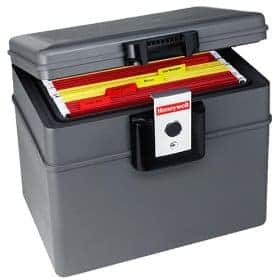
Some examples of home fire safes you can find on Amazon.com are found below.
A more expensive version that is file and computer media safe:
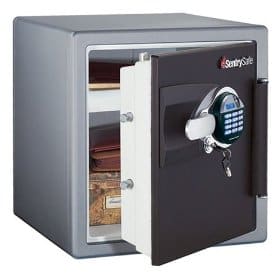
A less expensive version mainly for storing important paper documents (we have one like this):
When storing your documents it is a good idea to put them in waterproof storage containers or bags before putting them in your safe. That way you can ensure they are safe from moisture in the event of flooding or sprinklers going off during a fire. (Don’t forget to check the batteries in your smoke detectors and that you have a fire extinguisher handy as well! An ounce of prevention is worth a pound of cure!)
What Should I Keep In My Safe Deposit Box Or Fire Safe?
Once you’ve purchased a fire safe or rented a safe deposit box (or both), the next step is to put together a list of all the things you want to store in there.
One note that I’ve read in multiple places is that you should probably never keep the originals of important legal documents that people may need access to in your safe deposit box. Instead, keep the originals in a good fire safe at home, and keep copies in your safe deposit box. The reason for this is spelled out on one site:
Don’t put original wills, trust instruments, or powers of attorney in a safe deposit box. Instead, keep these in a fireproof safe at home or at your attorney’s office.
Why? When someone dies, a safe deposit box may be sealed for weeks, which could result in result in delays. You might even have to spend money securing a court order to open the box. Further, and here’s the Catch-22: the will’s executor will not be able to get to the box without the will that shows that he is indeed, the executor, resulting in headaches and delays.
So, just to be clear: Don’t put original copies of legal documents in a safe deposit box if they will be needed by anyone who cannot gain access to them. As we said before, feel free to put copies of legal documents in the safe deposit box.
Here is a list I put together of some things you may want to consider adding to your safe deposit box or fire safe.
Personal Papers
- Birth certificates
- Marriage certificate
- Will
- Passports
- Social Security Cards
- Copy of health information (vaccinations, hospitalizations)
- College degrees
- Copy of “What If I Die” spreadsheet listing important account information, insurance policies, etc.
Property and Insurance
- Stocks, bonds, certificates of deposit.
- Original deeds to property and vehicles.
- Collectibles
- Rare jewels or family jewelry.
- Videotape/DVD/thumb drive inventory of house. (Use a software to keep track)
- Receipts for big-ticket items like furnishings
- Your homeowner’s insurance contract.
- Receipts for home improvements
- Contracts
Those are a few things that you should consider adding to your safe deposit box and/or fire safe.
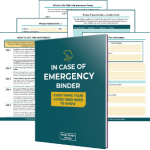
In Case Of Emergency Binder
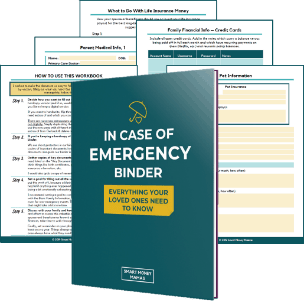
If you’d like something a little bit more comprehensive than our listing above, our friend Chelsea over at SmartMoneyMamas.com has put together what she’s calling an In Case Of Emergency Binder.
The Binder is a complete package that can help you plan for pretty much any eventuality. It’s over 100 pages of simple, printable worksheets (in a fillable .pdf) to organize everything your family may need to know if you’re gone.
It includes sections for things like household information, medical information, key personal documents, financial documents and logins, important contacts, important memories and more.
The binder costs $29, but it’s well worth the cost in my opinion as it will lead to giving you peace of mind that your loved ones are covered in case the worst case scenario were to happen. Fill it out, put it in your fire safe and in a secure online location, and you’ll be set to go.
Are there things that you think should be included that weren’t on our list? Let us know about it in the comments!
- In The Event Of An Emergency Series: Planning Ahead For Life’s Emergencies
- Preparing For Difficult Times: When The Money Manager Is Unable To Perform Responsibilities




Dont’ forget: Adoption papers! Also, if you don’t have a firesafe or can’t afford one right now, put everything in a plastic ziploc bag in your freezer. That’s usually undamaged in a fire (on the inside). A firesafe is better, but a freezer works in a pinch. Also, it’s a good idea to keep a recent copy of each utility bill–often needed to establish identity if your ID is lost/separated. (I had to use my phone bill once when my wallet was left inside a condemned building after an earthquake).
Jessica Ws last blog post..One success!
Great post! My husband and I have been procrastinating on this, and really just have to bite the bullet. It’s not a good idea to wait till something bad happens to make you wish you had done it in the first place!
Jens last blog post..GREASTER!
One thing that you don’t mention is that safe deposit boxes have one huge advantage over most “fire safes” you’d have in your home – theft protection.
Home fire safes are generally quite easy for a thief to break into – they’re meant to be safe in a fire, which doesn’t mean they’re safe from a thief with a crowbar. If somebody breaks in, it’s not difficult for them to walk away with the safe itself unless it’s bolted to the home.
It’s for this reason that I have a safe deposit box at a bank for valuables, and a fire safe at home for documents that aren’t valuable money-wise, but would be problematic if destroyed by fire or flood.
Good point George, thanks for bringing that up.
Thank you Peter you have helped me out on my assignment.
By the way, Why do people have their own vault at home and not in the bank safe deposit vault and why would it be good to have both.
I have both a small fire safe and safe deposit box. I keep originals of documents that would be needed in an emergency in my fire safe (last will, living will, paternity test of my children, birth certificates etc) as well as old family photos (100+years old), 2 100+ year old family bibles, a cd & usb drive of family records and photos etc……Basically I keep things in my fire safe that are irreplaceable but would not be wanted by a thief. My safe deposit box contains anything pertaining to money, irreplaceable things that people would want to steal because you can pick a fire safe up and walk away with it but you can’t do that with a safe deposit box.
I have been keeping some valuables in a safe deposit box in my credit union, and some, such as documents, at home. Not long ago I found out that the bank does not provide any kind of insurance in case of a fire, or even robbery!So I talked to some friends and found out that there is company called SDBIC that provides insurance for those safe deposit boxes. Prices are very affordable too.Does anybody know about it?
Is it illegal to put cash in a safe deposit box? I had one when I was a teen. I found that storing my extra tip money gave me the ability to stay away from it and keep it safe.